Description
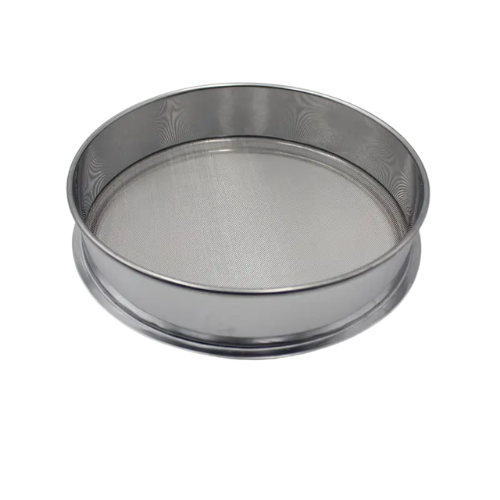
Our precision-engineered test sieves are designed for accurate and reliable particle size analysis across a wide range of industries. Available in diameters of 75 mm, 100 mm, 200 mm, 300 mm, and 450 mm, these sieves accommodate various sample volumes and are suitable for both laboratory and industrial-scale applications.
Each sieve is manufactured using high-quality stainless steel mesh and frames, ensuring durability, corrosion resistance, and compliance with international standards (ISO 3310, ASTM E11). The sieves are available in a full range of aperture sizes from 20 microns to 125 mm, depending on the diameter.
Purpose and Function
Test sieves are used to separate, classify, and analyse particles based on size. By stacking sieves of progressively smaller mesh apertures, users can perform a detailed particle size distribution analysis, enabling quality control, process validation, and compliance with technical specifications.
Applications
-
Pharmaceuticals – Powder granulation, excipient screening
-
Food & Agriculture – Cereal and flour analysis, spice grading
-
Soil & Environmental Science – Sediment, soil, and sludge particle analysis
-
Mining & Metallurgy – Mineral particle characterisation, ore sorting
-
Construction Materials – Sand, gravel, and aggregate grading
-
Chemicals & Plastics – Resin bead classification, pigment sizing
-
Cosmetics – Fine powder uniformity testing
Advantages
-
Wide Range of Diameters: From small-scale (75 mm) to industrial volumes (450 mm)
-
High Precision: Consistent aperture sizes conforming to global standards
-
Durable Construction: Corrosion-resistant stainless steel mesh and robust frames
-
Efficient Sieving: Stackable and compatible with mechanical or manual sieving
Disclaimer: Product images are for illustration purposes only. The actual brand received may vary based on availability, as Labogemdi sources high-quality laboratory products from multiple trusted suppliers. While we are not directly affiliated with specific brands, we ensure that all products comply with laboratory and research-grade standards, meeting the requirements of academic institutions, research laboratories, and industrial applications.