Description
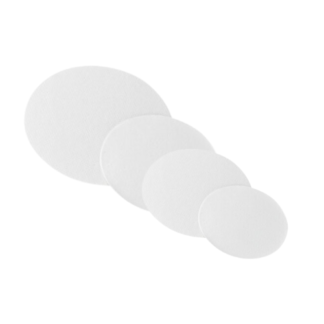
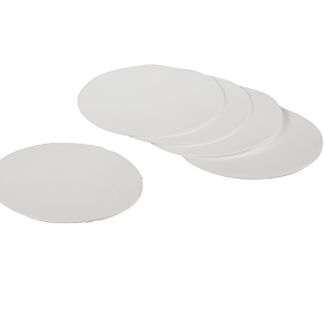
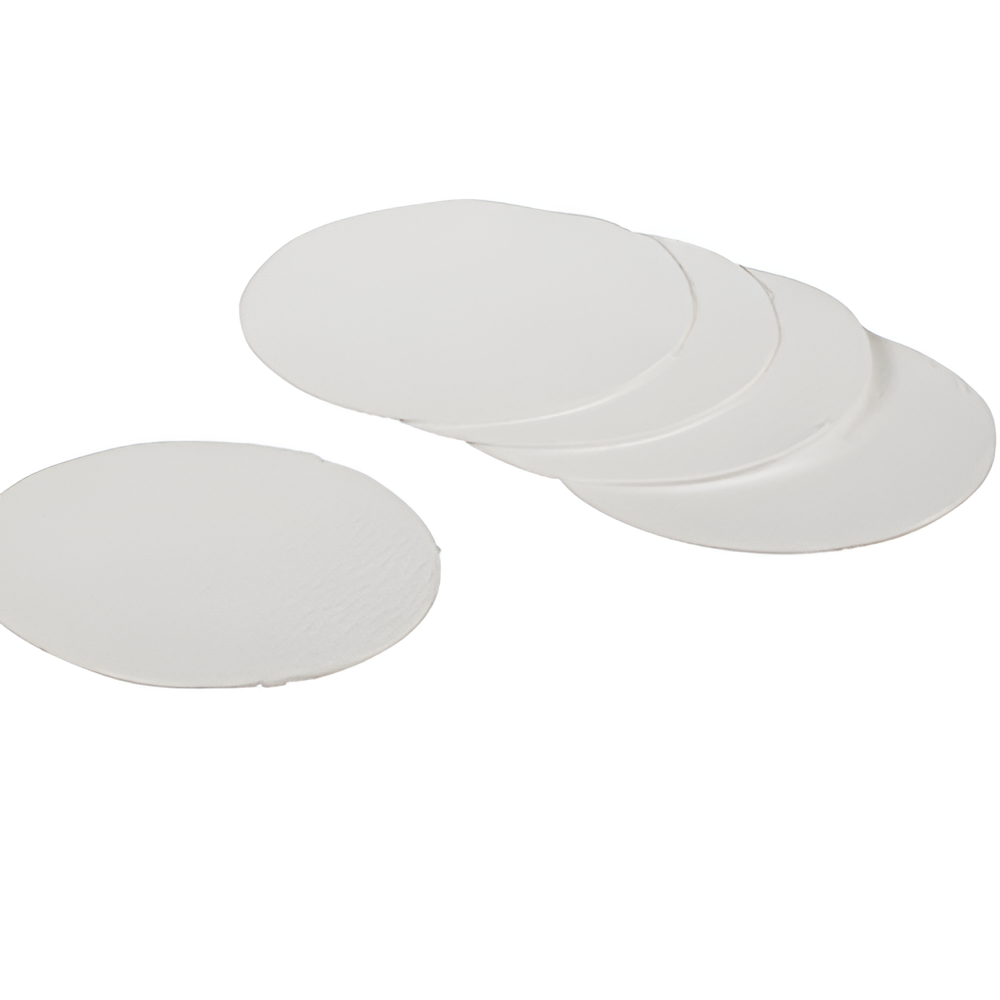
Quartz microfiber filters are high-purity, temperature-resistant filtration media composed entirely of amorphous silica (SiO₂). Their structure comprises nonwoven microfibers that provide a high surface area and low trace metal content. The absence of binding agents ensures thermal and chemical inertness, making them ideal for sensitive analytical applications.
Applications
Quartz microfiber filters are widely employed in environmental, atmospheric, and analytical chemistry due to their inertness and ability to withstand high temperatures.
1. Air Sampling and Ambient Monitoring
-
Application: Collection of particulate matter (e.g., PM10, PM2.5) for gravimetric or chemical analysis.
-
Justification: Quartz filters are ideal for trace elemental, carbon (organic/elemental carbon), and isotopic analysis due to low background contamination.
2. Thermal/Optical Carbon Analysis
-
Application: Analysis of organic carbon (OC) and elemental carbon (EC) in air samples.
-
Justification: The high thermal stability ensures the filter remains intact during high-temperature combustion stages.
3. Dioxin and Furan Sampling
-
Application: Collection of semi-volatile organic compounds (SVOCs) in stack gas and ambient air.
-
Justification: Quartz filters can be used at elevated temperatures (typically 300–400 °C) without decomposition or emission of interfering substances.
4. Gravimetric and Chemical Analysis of Aerosols
-
Application: Used in conjunction with high-volume or low-volume air samplers for mass concentration analysis of airborne particles.
-
Justification: Low mass and stable tare weight facilitate accurate gravimetric measurements.
5. Combustion Emission Studies
-
Application: Sampling of particulate emissions from combustion sources such as engines or industrial stacks.
-
Justification: High thermal resistance and chemical inertness allow for use in aggressive sampling environments.
| Parameter | Quartz Microfiber Filters | Glass Microfiber Filters |
|---|---|---|
| Composition | 100% quartz microfibers (pure silicon dioxide, SiO₂) | Borosilicate glass microfibers (with or without resin binders) |
| Binder Content | Binder-free | Available in binder-free or binder-containing variants |
| Thermal Resistance | Up to ~1000 °C | Up to ~500 °C (binder-free); lower with binders |
| Chemical Resistance | Excellent; inert to most chemicals including acids and bases | Good; resistant to acids and solvents except HF and strong bases |
| Background Contamination | Extremely low (ideal for trace metal and carbon analysis) | Low, but may contain trace contaminants (higher with binders) |
| Filtration Efficiency | High, especially for fine particulate matter | High for particles ≥0.3 µm |
| Typical Applications | Air sampling (PM, OC/EC), dioxin/furan collection, combustion studies | Water/air particulate analysis, total suspended solids, pre-filtration, gravimetric analysis |
| Pre-treatment Requirement | Often pre-heated (e.g., 500–900 °C) to eliminate contaminants | May be pre-ashed (e.g., 450–500 °C) for gravimetric accuracy |
| Weight Stability | Excellent stability for gravimetric analysis | Good stability, but may be affected by binder presence |
| Mechanical Strength | Moderate; more fragile due to lack of binder | Higher (especially with resin binders) |
| Preferred for Carbon Analysis? | Yes (OC/EC and thermal-optical methods) | No (higher background carbon possible) |
| Preferred for Water Filtration? | No (not hydrophilic by default) | Yes (especially for suspended solids and biological debris) |
Disclaimer: Product images are for illustration purposes only. The actual brand received may vary based on availability, as Labogemdi sources high-quality laboratory products from multiple trusted suppliers. While we are not directly affiliated with specific brands, we ensure that all products comply with laboratory and research-grade standards, meeting the requirements of academic institutions, research laboratories, and industrial applications.