Description
SAX SPE Cartridge: High-Capacity Sorbent for Strong Anion Exchange
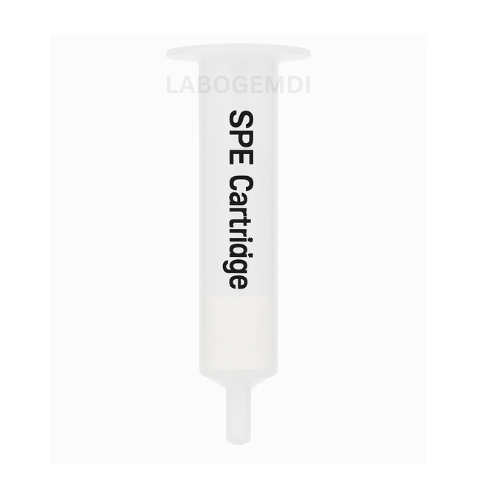
The SAX (strong anion exchange) solid-phase extraction (SPE) cartridge is a quaternary ammonium bonded phase on a silica matrix. It remains positively charged across the full pH range, providing a strong anion exchange capacity for efficient extraction of weakly anionic compounds. This makes SAX SPE cartridges ideal for isolating weakly acidic compounds, such as carboxylic acids, from complex sample matrices.
Key Features
- Flexible selectivity by adjusting the solvent conditions
- Strong anion exchange mechanism with no secondary interactions
- Consistent performance across a wide pH range
- High affinity for weakly acidic compounds
Applications
- Food safety and agricultural analysis
- Detection of hormone residues in meat products
- Analysis of sulfonylurea herbicides in soil, vegetables, and cereals
- Biochemical and pharmaceutical research
- Separation of proteins, peptides, phenols, nucleic acids, nucleotides, and surfactants
- Environmental and industrial testing
- Removal of anionic contaminants such as organic acids, nucleotides, sulfonates, and inorganic anions from water and other samples
The SAX SPE cartridge provides reliable anion exchange retention, making it an effective tool for biochemical, food safety, environmental, and pharmaceutical applications.
Disclaimer: Product images are for illustration purposes only. The actual brand received may vary based on availability, as Labogemdi sources high-quality laboratory products from multiple trusted suppliers. While we are not directly affiliated with specific brands, we ensure that all products comply with laboratory and research-grade standards, meeting the requirements of academic institutions, research laboratories, and industrial applications.